Edibles THC Calculator: Convert Flower Strength Into Edible Mg
Working out your edible dose should feel like translating one language into another. Flower strength is usually expressed as percent THC by dry weight. Edibles are measured in milligrams you swallow. Somewhere between those two numbers is the part people guess at, and guessing is where the “why did this hit so hard?” stories come from.
An edibles THC calculator is just a clean way to do that translation. You tell it what you start with, and it outputs how many milligrams of THC you can realistically expect in each portion. But the real value is not the button-push. It is knowing what the calculator assumes, where it is honest, and where it can be off.
If you have ever weighed a batch of butter, strained it, portioned it into cookies, and then felt like the effect didn’t match your expectations, you already understand the core problem: flower THC percentage does not equal edible THC. You get losses during decarb, extraction, and straining. Your plant is not perfectly uniform. Your decarb might be slightly hot or slightly cool. Your infusion may not pull every last molecule. A good THC in edibles calculator lets you account for those losses instead of pretending they never happen.
Below is a practical, real-world approach to calculating THC in edibles dose, plus a set of example scenarios you can use immediately. I’ll also call out the judgment calls that matter most, because a calculator can do the math but it cannot choose your assumptions for you.
The basic units, and why the math is simpler than it feels
Most flower labels or lab results give THC as a percentage by weight. For example, “20 percent THC” usually means 20 g THC per 100 g of dry flower, if the lab reporting is done on a dry-weight basis.
Edibles dosing, on the other hand, is typically discussed in milligrams per serving. One milligram is a thousandth of a gram, and that conversion is easy once you choose a consistent weight unit.
A THC edibles calculator is essentially doing these steps:
1) Convert flower mass and THC percentage into total THC available
2) Reduce that number by an efficiency factor (because extraction is never perfect) 3) Convert total THC to milligrams 4) Divide by the number of servingsThat efficiency factor is where most “calculator rage” happens. People either set it too optimistically, or they use 100 percent as if decarb and extraction are magical. In practice, efficiency depends on how you decarb and how you infuse.
A practical formula you can trust
You can set up the calculation like this:
Total edible THC (mg) = Flower grams × THC% × 10,000 × Extraction efficiency
Here’s why 10,000 shows up:
Flower grams × THC% gives you grams of THC. If you have 0.20 g THC, that equals 200 mg. The conversion from grams to https://www.ounceofhope.com/how-much-of-an-edible-should-you-take-thc-calculator/ milligrams is × 1,000, and the THC% is a fraction (so × 0.20). Put together, you end up with a multiplier of 10,000 when you use THC% as a whole number (like 20 instead of 0.20).Then:
THC per serving (mg) = Total edible THC (mg) ÷ number of servings
This is the heart of a THC calculator edibles method. If you build any “THC edibles dose calculator” online, it is likely using a version of this with some defaults.
Extraction efficiency: the parameter calculators can’t pull from your kitchen for you
When people say “my edible didn’t feel right,” the issue is often efficiency assumptions. Efficiency is a catch-all for everything that keeps THC from ending up in the final edible.
Things that influence it:
- Decarb quality (how fully cannabinoids are converted into their more active forms)
- Infusion temperature and time (especially how long fat contacts the material)
- Straining technique (how much plant material you lose with the pulp)
- Recipe style (butter, oil, alcohol tincture, gelatin, and other formats behave differently)
- Particle size (grinding flower tends to improve contact)
- Batch thickness (thicker mixtures can trap material)
Because of this, different infusions can legitimately land in different places even when the starting flower is the same. So rather than treating efficiency like a fixed truth, treat it like a range you narrow over time.
Choosing a starting efficiency range (without pretending certainty)
If you want a single number for your first passes, you can pick a conservative efficiency and then adjust after you learn how your process behaves.
Many home recipes land somewhere in the “not perfect but not terrible” zone. It’s common to use something like 0.6 to 0.8 as a working efficiency when doing fat infusions at home, especially with decent decarb and careful infusion. If you’re being extremely gentle or using a method known for higher losses, you might choose lower. If you’re doing a thorough decarb, you grind thoroughly, you keep temperature in a safe window, and you infuse long enough to extract, you might choose higher.
But here is the key: pick an efficiency you can defend based on your process, then be consistent. If you always calculate at 70 percent and then never change anything, your results will become predictable.
If you are following instructions from a brand or program, such as Ounce of Hope, you can also mirror the assumptions they use if they provide a dosing method. If they do not, the safest approach is to start conservative and dose low.
The decarb question: THC percentage is not the whole story
A lot of confusion comes from cannabinoid labels. Lab reports and dispensary menus often display THC as a single “THC” number that can include both THCA and THC, depending on how they calculate or present results.
In a strict chemistry sense, raw flower is rich in THCA, which needs decarboxylation to become active THC. In cooking, “THC percentage” edibles thc calculator on a label is often already meant to represent total THC potential, but not always in a way that makes home calculations foolproof.
This is why most edible THC calculators focus on efficiency rather than trying to recreate exact chemical conversion in your oven. A good calculator doesn’t need to know your exact decarb chemistry. It needs you to estimate how much of that labeled potential you actually end up with in the edible.
If your decarb was uneven, or you undercooked it, your real dose can be lower than the calculator predicts. If it was too hot and you degraded cannabinoids, it can also be lower. The sweet spot is process control, not guesswork.
A hands-on example: from 3.5 grams of 20 percent flower to servings
Let’s run a typical scenario.
- You start with 3.5 g of flower
- Lab says 20% THC
- You plan to make an infusion and portion it into 10 servings
- You choose an extraction efficiency of 0.7 as a reasonable starting point
Step 1: total THC in the starting material
Total THC (grams) = 3.5 × 20% = 3.5 × 0.20 = 0.7 g THCStep 2: convert to milligrams and apply efficiency
Total edible THC (mg) = 3.5 × 20 × 10,000 × 0.7 That equals: 3.5 × 20 = 70 70 × 10,000 = 700,000 700,000 × 0.7 = 490,000 mgThat number is clearly wrong at face value because we used a multiplier too aggressively without checking units. Let’s do it the safer way using grams, then convert:
Total THC (grams) = 0.7 g
Convert to mg: 0.7 g × 1,000 = 700 mg potential THC Apply efficiency: 700 mg × 0.7 = 490 mg total edible THCStep 3: THC per serving
490 mg ÷ 10 servings = 49 mg per servingThat feels like a plausible edible dose per bite for something made with relatively strong flower. The lesson here is that unit sanity checks matter. If you use a multiplier shortcut, verify it with a quick “does this land in the right ballpark?” check. Real edible doses per serving are usually in the tens of milligrams for recreational edibles made with decent flower strength, not in the hundreds of thousands.
The cleaner way to remember it
If THC% is your label percent:
- Potential THC (mg) = flower grams × THC% × 10
Because:
Flower grams × THC% gives grams of THC × 1,000 mg per gram, and THC% as a percent introduces a factor of 0.01, which collapses into the ×10 shortcut.Example: 3.5 g × 20% × 10 = 3.5 × 20 × 10 = 700 mg potential THC. Then multiply by efficiency.
So:
Edible THC (mg) = flower grams × THC% × 10 × extraction efficiency
Dose per serving (mg) = that ÷ servingsThat is the core engine behind a THC Edibles Calculator.
“THC in edibles calculator” examples you can model
Example A: mild flower, small batch, low efficiency
- 1.5 g flower
- 12% THC
- efficiency 0.6
- 8 servings
Potential THC: 1.5 × 12 × 10 = 180 mg
Edible THC: 180 × 0.6 = 108 mg total Per serving: 108 ÷ 8 = 13.5 mgIf this is for edibles THC calculator planning, you’d likely dose conservatively. 13.5 mg can be strong for some people, mild for others, especially depending on tolerance and whether they take it on an empty stomach.
Example B: strong flower, careful infusion, higher efficiency
- 5 g flower
- 25% THC
- efficiency 0.8
- 20 servings
Potential THC: 5 × 25 × 10 = 1,250 mg
Edible THC: 1,250 × 0.8 = 1,000 mg Per serving: 1,000 ÷ 20 = 50 mgThis is the kind of number where “half a serving” becomes a meaningful plan. People often think they need to eat the whole thing because the math gives them a big number. In practice, taking a full serving can overshoot if your personal metabolism is slower or if the edible is slower to distribute.
Example C: a bigger batch where uniformity matters more than the calculator
- 10 g flower
- 18% THC
- efficiency 0.7
- 40 servings
Potential THC: 10 × 18 × 10 = 1,800 mg
Edible THC: 1,800 × 0.7 = 1,260 mg Per serving: 1,260 ÷ 40 = 31.5 mgWhen you double or triple batch sizes, the math may look perfect, but uniform distribution becomes the bottleneck. If your infused fat or oil is not mixed well before portioning, some servings carry more potency than others, and your “dose per serving” becomes a range in the real world. That’s why even the best THC in edibles calculator cannot fix uneven stirring.
How to use a THC edibles dose calculator in a way that reduces surprises
If you want to use a calculator, use it like you would use a recipe scale. The goal is consistency, not illusion.
Here’s a short checklist of inputs that matter most, and the ones people tend to mess up:
- Flower weight in grams, not “a handful”
- THC percentage as a number (like 20), not a fraction
- Extraction efficiency estimate based on your method
- Number of servings you actually portion
- How you plan to dose yourself, because tolerance is not a constant
If your flower strength is unknown, you can still estimate, but your results will be wider. Many people start with labeled assumptions, then adjust efficiency and serving size after the first batch.
A quick note about “servings”: the calculator needs your real portion size
A “serving” in edible recipes is often ambiguous. One person considers a cookie one serving. Another breaks a square into two. Another makes gummies where each gummy is its own serving. A THC Edibles Calculator can only divide total mg by whatever serving count you choose.
For example, if you bake 20 cookies but you actually eat 1 cookie as a unit, then the serving count is 20. If you plan to eat half a cookie as your starting unit, you effectively created 40 servings, even if the cookie count is still 20. That matters for dose planning.
If you are working with gelatin, you might count gummies. If you are pouring into molds, each mold cavity can be its own serving. It sounds obvious, but people regularly divide by “number of pieces the pan could make” instead of “how you will portion and eat.”
Two styles of edible potency: predictable and unpredictable
Most at-home methods fall into predictable dosing when you control mixing and portioning. They become unpredictable when the recipe has built-in separation or uneven infusion.
- Edibles with consistent fat distribution (like uniform gummies or thoroughly mixed infused butter) tend to dose more evenly.
- Recipes where plant matter clumps or where infusion is partial tend to create hot spots.
This is one reason experienced cooks treat calculators as a planning tool, not a guarantee. It also explains why two people following the same recipe can report different experiences. Their process, serving sizes, and mixing habits differed.
Common mistakes that make calculators look “wrong”
Even without overcomplicating things, a few patterns show up in real kitchens. These are worth watching, because they tend to create consistent overestimation or underestimation.
- Using the wrong weight (for example, using fresh flower weight instead of dry weight)
- Forgetting that you chose an efficiency number, and then switching to a different method later
- Dividing by a “servings” number that does not match how people actually eat
- Under-decarnbing, then blaming the calculator
- Skipping thorough mixing before portioning
If you correct those, a THC calculator edibles approach becomes much more reliable.
Designing your first batch plan: start low, learn fast
A practical way to use an edibles thc calculator is to treat the first batch like a measurement campaign. You pick conservative assumptions, portion smaller, and observe. You do not need heroic restraint, but you do need information.
If you are using a new strain, a new decarb method, or a new infusion vessel, assume your efficiency could shift. If you already know your method lands around a certain efficiency range, you can keep tighter control.
A very common strategy is to decide ahead of time what “testing dose” looks like, then scale up later once you know how long it takes to peak and how it feels.
That leads to a question people rarely ask early enough: how long are you waiting before deciding whether it “worked”?
Edibles often feel slow at first, and rushed decisions are where overdosing happens. A calculator can tell you the mg, but it cannot control your timeline.
What about CBD, minor cannabinoids, and the “THC only” view?
Most THC Edibles Calculator math focuses on THC alone, because mg dosing and effect intensity typically track with THC concentration. But if your flower has meaningful CBD or other cannabinoids, your subjective experience can shift. Some people feel a smoother onset. Others feel similar. This is not a reliable dosing adjustment, but it matters for expectations.
A professional approach is to dose based on THC mg, not on “how it makes me feel,” then update your personal model over time. If you mix strains, keep notes. You do not need a lab notebook, but you do need enough detail to recognize patterns.
Using the calculator with different product formats
You can use the same core approach for many edible formats, as long as you translate the infusion result into mg total THC and then divide by portions.
Where people get tripped up is when they switch from one format to another:
- A butter infusion and a tincture infusion are not automatically equivalent in how much THC ends up in the final product.
- A water-based edible cannot be assumed to carry the same THC fraction as an oil-based one.
- Gummies may be measured by weight, but gummies can also trap or release THC unevenly if the mixture is not fully homogeneous.
So your THC in edibles calculator can stay the same, but your extraction efficiency might need a new value for each method.
A realistic “calculator template” you can set up at home
You do not need special software. You can do this with a calculator app. The clean workflow is:
First, compute potential THC (mg): flower grams × THC% × 10
Second, estimate edible THC total: potential THC × efficiency Third, compute per serving: total ÷ servings Then dose based on your personal serving unit. 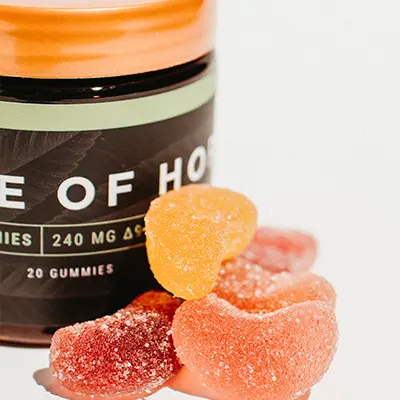
If you want to make it easier, write it directly in your notes before you start cooking, so you do not scramble mid-batch.
How to refine your efficiency number after your first batch
This is where experience beats spreadsheets. If you made a batch and you know what one serving was for your test dose, you can compare how it felt relative to your tolerance. You cannot measure plasma THC concentration in your kitchen, but you can refine your assumptions.
If your calculated dose consistently feels higher than expected, lower your efficiency assumption next time. If it always feels weaker, raise it slightly. Keep changes small. Large swings tend to hide the real variable causing the mismatch, like uneven decarb or inconsistent mixing.
This is also where you should consider that edible absorption varies between people and even between days, depending on what you ate and your gut factors. That means you might never land on a single perfect efficiency number, but you can get close enough to plan doses responsibly.
Safety and responsibility, built into good dosing math
I’ll keep this grounded: a THC edibles dose calculator can help you avoid the two extremes, too low and too high, but it cannot remove risk. Children, pets, and anyone who is not choosing to dose intentionally are obvious no-go situations.
For adults dosing at home, the practical safety routine is:
- Start with a smaller portion than the calculator suggests if you are new or changing methods
- Wait long enough to feel the peak before taking more
- Keep the rest stored safely and clearly labeled
Math can make dosing more predictable, but your habits and your environment decide whether it stays predictable.
Where “Ounce of Hope” fits, and why the calculator still matters
If you’re using a standardized approach or guidance from a program or brand such as Ounce of Hope, you might have access to dosing frameworks or typical potency assumptions. That can help you move faster. Still, the calculator is useful because your actual flower weight, your servings, and your infusion method determine your edible mg.
Even when someone else’s method is solid, your batch is your batch. A THC Edibles Calculator gives you a way to adapt safely, rather than relying on generic “this is about 10 mg” claims that may not match your inputs.
Quick example: putting it together for a real decision
Say you plan to make cookies from 4 g of flower at 22% THC.
You infuse carefully and strain thoroughly, and you believe your extraction efficiency is around 0.75. You make 24 cookies and each cookie will be one serving.
Potential THC: 4 × 22 × 10 = 880 mg
Edible THC total: 880 × 0.75 = 660 mg THC per cookie: 660 ÷ 24 = 27.5 mgIf you are cautious, you might start with half a cookie at 13.75 mg. If you have tolerance, you might take one cookie and wait. Either way, you are making the decision from numbers, not vibes.
And if the next batch feels stronger or weaker, you adjust your efficiency estimate rather than tossing out the method.
A final word on what to expect from a THC edibles calculator
A THC Edibles Calculator turns flower strength into edible milligrams, and it does that by translating weights into mg and accounting for losses with an efficiency assumption. When people complain that a calculator is “wrong,” the real issue is usually one of three things: the efficiency guess was off, the serving math didn’t match how they portioned, or the decarb and infusion steps weren’t consistent.
If you keep your assumptions stable, you’ll get repeatable results. If you change your method, treat it as a new experiment and recalibrate.
That is the real professional mindset behind any THC calculator edibles process: not perfect prediction, but better control.